
Quick Answer: US Secretary of State Marco Rubio called India a "refining superpower" in Mumbai on Tuesday and said it could help ease global energy shortages by refining Venezuelan crude. The remarks put energy at the center of his India visit, alongside a bilateral trade deal Rubio described as "very close" to being finalized.

US Secretary of State Marco Rubio. Photo: US Department of State, public domain, via Wikimedia Commons.
US Secretary of State Marco Rubio on Tuesday called India a "refining superpower" and said New Delhi could play a key role in easing global energy shortages by processing Venezuelan crude oil. The remarks, made to reporters in Mumbai, are a significant new development in a visit that began earlier in the day — GlobalDeskNews previewed the trip's trade-deal and Russian-oil agenda on Tuesday morning.
Rubio arrived in India's financial capital on Tuesday and was received by External Affairs Minister S. Jaishankar. India's foreign ministry spokesperson Randhir Jaiswal said on X that it was Rubio's second visit to India this year, adding that he was received at the airport by Maharashtra minister Ashish Shelar. Jaishankar said afterward that the two "shared views on further advancement of our ties, focusing on trade, energy, technology, defense and people-to-people ties."

India's External Affairs Minister S. Jaishankar, who received Rubio in Mumbai. Photo: US Department of State, public domain, via Wikimedia Commons.
The energy pitch was the sharpest part of the day. Asked what role India could play in meeting global energy demand, Rubio pointed to the country's vast refining capacity — and specifically to Venezuelan heavy crude.
The Rubio India Venezuela oil pitch, in his own words
"India is a refining superpower," Rubio told reporters. "They have the capability to refine heavy crude. They've done so in the past, and I think as more and more Venezuelan oil comes online, it's something they can do."
He went further, noting that Indian companies already hold ground in Venezuela. "They also, by the way, have pre-existing oil concessions in Venezuela that can produce more themselves. So, all these are positive things," he said.
Rubio was careful not to oversell the idea. "I'm not claiming to you that Venezuela alone can fill the hole that could be caused by some of the things that are happening around the world, but I think over time, it most certainly can, and in the short term, it can certainly help," he added.
The framing matters. Washington isn't just asking India to buy different oil — it's asking India to become a processing hub for a new source of global supply, one that could take pressure off strained energy markets in the months ahead.
Why Venezuela oil matters right now
Energy markets are on edge. Crude prices have been trading near $110 a barrel, driven by Houthi attacks on shipping and infrastructure and by the continuing US-Iran war that has disrupted flows through the Middle East. Any credible new supply — or new refining capacity for heavy crude — lands differently in a market this tight.

An oil refinery from the air (file photo). Photo: Chris, geograph.org.uk, CC BY-SA 2.0, via Wikimedia Commons.
Venezuela sits on some of the world's largest petroleum reserves. According to Arab News, those reserves have been managed by the US administration since it ousted former president Nicolas Maduro in January — which means Washington now has unusual leverage over how much Venezuelan crude reaches world markets, and who refines it.
India's refineries are built for exactly this kind of crude. The country's complex refineries can process heavy, sour grades that many simpler plants can't handle, and they have done so with Venezuelan oil in the past. Rubio's argument is straightforward: the capacity exists, the experience exists, and the concessions exist — so the missing piece is mainly political and logistical.
"Very close" to a trade deal
The energy pitch didn't come alone. Rubio told reporters in Mumbai that Washington and New Delhi are nearing a bilateral trade agreement.
"I would say we're about as close as you can be without having executed the agreement. I think there's a small number of items left to wrap up, so I think that will happen shortly," he said.
The visit comes days after US President Donald Trump waived potential tariffs on India over its purchases of Russian oil, removing what had been a major obstacle in the relationship. On the Russian-oil question itself, Rubio struck a notably understanding tone.
"I think what India has expressed repeatedly is its desire to diversify its energy portfolio, which is a smart thing to do," he said. "It's not easy to do that from one day to the next. I think they've made some substantial progress in that regard, and we're happy to see that."
He added: "But in the end, it's not just about Russian oil; it's about India's desire to diversify, and we think we can be a source of some of its energy inputs. We've discussed Venezuela and other countries, and I think it's in our interest to have strong allies with diverse energy portfolios."
Jamnagar and the refinery angle
Rubio is scheduled to visit the Reliance Industries crude oil refining complex in Jamnagar on Wednesday — described by Arab News as the world's largest such refining facility. The stop is no accident: it puts the secretary of state inside the very infrastructure his "refining superpower" argument rests on.
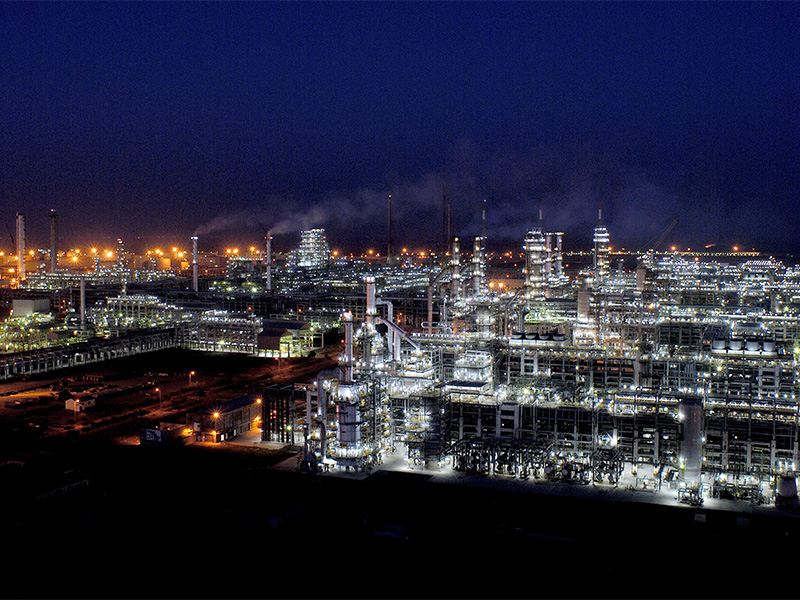
The Reliance refinery complex at Jamnagar, which Rubio is scheduled to visit on Wednesday. Photo: Radia3746, Wikimedia Commons, CC BY-SA 4.0.
The Jamnagar visit also signals how commercial this trip is. Energy, trade, defense cooperation and critical technologies are all on the agenda, and Rubio's meetings in Mumbai include business leaders alongside government officials. After his talks with Jaishankar, Rubio posted on X that the two had discussed energy security and defense cooperation while reaffirming the importance of the US-India strategic partnership.
For India, the pitch has obvious attractions — a bigger role in global energy flows, leverage in trade talks, and a path to diversify away from Russian crude without an abrupt cutoff. The complications are real too: Rubio himself acknowledged that "a few impediments" around sanctions would need to be worked through, and any Venezuelan arrangement would have to survive the politics of a region still absorbing the aftershocks of January's upheaval.
Why it matters
This is the clearest signal yet that Washington wants India's refining muscle deployed as a strategic asset, not just a commercial one. With the US-Iran war still straining energy supplies and midterm elections two weeks away sharpening Washington's focus on fuel prices, the administration is hunting for supply-side answers it can point to. India's refineries are one of the few levers big enough to matter.
For New Delhi, the proposal dovetails with its own goals: diversified supply, deeper US ties, and a trade deal that has been inching forward for months. If the Jamnagar visit produces concrete commercial discussions, this week's rhetoric could turn into contracts faster than skeptics expect.
What happens next
All eyes move to Jamnagar on Wednesday, where Rubio's tour of the Reliance complex will show whether the "refining superpower" line was scene-setting or the prelude to deals. Watch for any announcements on Venezuelan crude volumes, refinery partnerships, or sanctions carve-outs — and for the trade agreement Rubio says is nearly done. If the deal lands this week, the energy pitch and the tariff waiver will look like two halves of the same bargain.
Key Takeaways
- Marco Rubio called India a "refining superpower" in Mumbai on Tuesday and said it could refine growing volumes of Venezuelan crude.
- He said India holds pre-existing oil concessions in Venezuela and that sanctions-related hurdles would need to be worked through.
- Rubio described a bilateral India-US trade deal as "very close," with only a small number of items left to wrap up.
- The remarks followed Trump's waiver of potential tariffs on India over its Russian oil purchases.
- Rubio visits the Reliance refining complex in Jamnagar — described by Arab News as the world's largest such facility — on Wednesday.
- Jaishankar said the talks covered trade, energy, technology, defense and people-to-people ties.
Frequently Asked Questions
Why is Marco Rubio visiting India in October 2026?
Rubio arrived in Mumbai on Tuesday for talks on trade tariffs, defense cooperation and energy security, his second India trip this year. The visit follows his Central Asia tour and comes as Washington pursues a bilateral trade deal with New Delhi, days after Trump waived potential tariffs on India over its Russian oil purchases.
What did Rubio mean by calling India a "refining superpower"?
He meant India's refineries can process heavy crude oil that many countries' plants cannot handle. "They have the capability to refine heavy crude. They've done so in the past," Rubio said, arguing that as more Venezuelan oil comes online, India's existing capacity and experience make it a natural processing hub for that crude.
Why does the US want India to refine Venezuelan oil?
Global energy markets are strained, with crude near $110 and Middle East supplies disrupted by war. Venezuela holds huge reserves now under US administration management, and more of its oil coming online could ease shortages. India already refines heavy crude and holds Venezuelan oil concessions, so Washington sees a ready-made solution.
How close is the India-US trade deal?
Rubio said the two sides are "very close" to finalizing it: "I would say we're about as close as you can be without having executed the agreement. I think there's a small number of items left to wrap up, so I think that will happen shortly." No signing date has been announced.
What did Rubio say about India's Russian oil purchases?
He was notably understanding, backing India's push to diversify its energy sources. "I think what India has expressed repeatedly is its desire to diversify its energy portfolio, which is a smart thing to do," he said, adding that the US could itself become a source of some of India's energy inputs.
Why is Rubio visiting the Jamnagar refinery?
He is scheduled to tour the Reliance Industries crude oil refining complex in Jamnagar on Wednesday, described by Arab News as the world's largest such facility. The visit puts him inside the infrastructure behind his "refining superpower" argument and signals the trip's commercial focus, with business leaders also on his meeting schedule.
Could sanctions block Indian refining of Venezuelan oil?
Possibly — and Rubio acknowledged it. He said India sounds ready and willing, but "there might be a few impediments that stand in the way in terms of sanctions and so forth that we'll have to work through." Any arrangement would need US sanctions carve-outs or licenses before Indian refiners could process Venezuelan crude at scale.
Sources
- Hindustan Times — "Rubio backs 'India's need to diversify' energy sources, says US can help meet needs amid Russian oil debate" (full story)
- Arab News — "Rubio arrives in India with trade deal, energy security on agenda" (full story)
- Times Now — "'A Refining Superpower': Marco Rubio Says India Can Help Ease Global Energy Shortages" (full story)
By GlobalDeskNews Staff