
Saudi Arabia intercepted and destroyed three Houthi ballistic missiles on Monday night, the Saudi-led coalition said, as the kingdom's confrontation with Yemen's Houthis brought fresh missile fire over the capital and the country's southwest. It was the latest in a string of attacks that have killed at least 16 people and wounded hundreds at Saudi airports over the past week.
Coalition spokesman Maj. Gen. Turki al-Malki said one missile was intercepted over Riyadh and two others were destroyed over Khamis Mushait in southwestern Saudi Arabia. The Houthi military claimed responsibility for the attacks, saying it had targeted Riyadh's King Khalid International Airport and a military base — claims the Saudi side has not confirmed. The group also renewed its warning to international airlines against flying to Saudi airports.
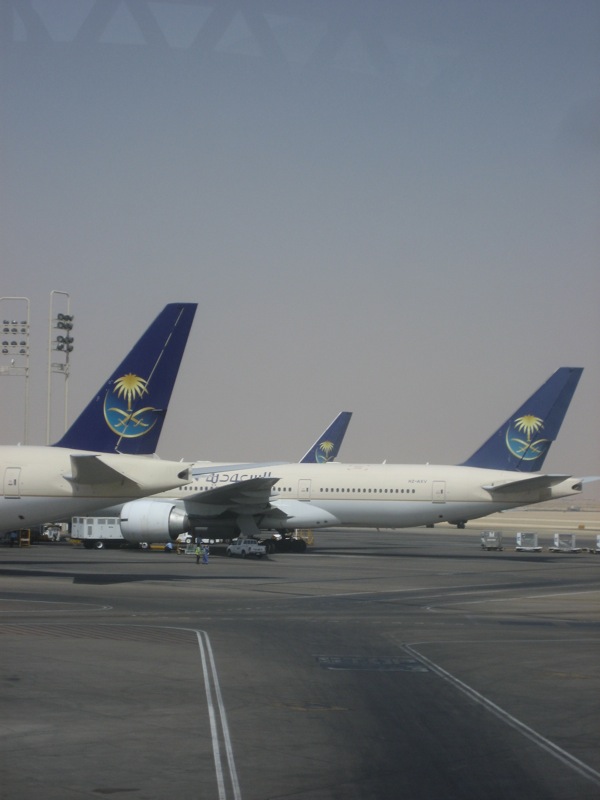
Saudi Arabia intercepts Houthi missiles: how Monday night unfolded
The evening began with a jolt for Riyadh's roughly eight million residents. At 18:08 GMT (11:08pm Pakistan time), Saudi Arabia's National Early Warning Platform pushed a danger alert to mobile phones across the capital: "The area is under a hostile aerial threat. Please remain calm, stay indoors or in a safe place away from windows and doors."
Minutes later, several powerful explosions rattled the city — most likely interceptor missiles destroying the incoming weapons. Al-Malki then announced that air defenses had downed the incoming missile fire from Yemen. By 18:31 GMT, the civil defense agency gave the all-clear: "The danger to the city of Riyadh has passed. For your safety, please continue to follow the instructions at civil defense and avoid gatherings and photography at all costs."
The night was not over. Later Monday, al-Malki announced that air defenses had intercepted and destroyed two additional ballistic missiles launched toward Khamis Mushait. An emergency warning for that city, too, was later lifted. In all, the coalition says it stopped three missiles on Monday.

Houthi claims and the airline warning
Houthi military spokesperson Yahya Saree said the group had attacked Riyadh's King Khalid International Airport with a ballistic missile on Monday evening and the Khamis Mushait airbase with a drone, calling the strikes "precise" and "direct." Saudi Arabia has not confirmed those specific claims. Independent verification of battlefield claims from either side is extremely difficult, and readers should treat them with caution.
The Houthis also reiterated a warning to all airlines and travelers against using Saudi airports and airspace, which they described as "vulnerable to targeting" — except for the airports in Mecca and Medina. The warning is biting: hundreds of flights are cancelled, the US Federal Aviation Administration told American airlines to exercise caution over Saudi Arabia, and the US Embassy in Riyadh restricted government employees' airport use. The embassy also noted Americans had been detained for photographing the attacks' aftermath, warning that filming missile interceptions "exposes you to legal liability."
Britain went further on Sunday, warning against all but essential travel to Jeddah, Dammam and every Saudi airport except Medina, and suggesting British citizens consider leaving Saudi Arabia by land to neighboring countries.

Trump warns Houthis after speaking to the Saudi crown prince
US President Donald Trump weighed in again on Monday, telling reporters he had spoken with Saudi Crown Prince Mohammed bin Salman. He gave no details of the call, but his verdict on the Houthis was blunt: "The Houthis are misbehaving very badly. No good."
It followed his Saturday remarks, when — asked whether Washington would join Saudi strikes on the Houthis — he said: "We may. We're going to look at it." So far the US has held back from direct involvement: Trump rejected two Saudi appeals for strikes last month, and current American help is limited to intelligence, targeting and refuelling support. Secretary of State Marco Rubio confirmed a US citizen was among those killed, calling the attacks "a blatant disregard for innocent civilian life."

Houthi warning to Washington: a "swift, painful response"
The Houthis are not backing down from the American question. Mohammed al-Bukhaiti, a member of the group's political bureau, told AFP on Monday that if the United States joins the war against Yemen, "there will be a swift and painful response targeting the US and all its interests in the region." He also warned employees and workers at Saudi oil facilities and airports to stay away from those sites, calling them "legitimate targets."
The threat matters because the energy stakes keep climbing. OPEC ministers said Monday that war-driven disruptions had pushed shipping and insurance costs to "unprecedented levels" — more than a third of the commodity's value — warning of inflationary pressure worldwide. Saudi Arabia's East-West pipeline is already knocked out, and the Strait of Hormuz crisis hangs over global oil flows.
Iran offers to mediate between Riyadh and the Houthis
In a striking diplomatic twist, Iran has offered to facilitate talks between Saudi Arabia and the Houthis after the deadly airport attacks. Iranian Foreign Minister Abbas Araghchi spoke with his Saudi counterpart, Prince Faisal bin Farhan Al Saud, on Sunday — their first publicly reported contact since the attacks intensified.
The offer raises obvious questions: Iran is widely described as the Houthis' main backer. Whether Riyadh accepts mediation from its regional rival's ally — while pledging a "decisive response" and asking Washington for strikes — is far from clear. Iran also said a planned Gulf meeting with Tehran on the Strait of Hormuz had been postponed at Saudi Arabia's request.
The wider war: Yemen's ground offensive
Behind the missile exchanges, the ground war is accelerating. Yemen's internationally recognised government says its forces carried out 1,879 "targeting operations" against the Houthis in the past 24 hours under its "Dawn of Yemen" campaign, claiming about 950 Houthi fighters killed. The Houthi-run Health Ministry says Saudi attacks killed 107 people and wounded 278 — mostly women and children — across 13 provinces since September 3. Neither side's figures can be independently verified.
Turkey's President Recep Tayyip Erdogan condemned the attacks on Monday, and the UAE's presidential adviser Anwar Gargash said the kingdom's security was "indivisible" from the Emirates', calling for revived joint Gulf action on security and defense.
Why it matters
This is no longer a distant border skirmish. Three ballistic missiles fired at a G20 capital in a single night, an international airport shut for at least a week, the world's largest oil exporter warning that shipping costs have hit unprecedented levels — the conflict is pulling in Washington, Tehran, Ankara and the Gulf states at once. For travelers, the immediate cost is cancelled flights and embassy warnings. For the region, the danger is a wider war: Trump is openly weighing US strikes, the Houthis are threatening American interests, and Iran is positioning itself as both arsonist and firefighter.
What happens next
Watch four things. First, Saudi Arabia's response: Riyadh has promised a "decisive" one, and Monday's interceptions won't satisfy hardliners who want retaliation. Second, Trump's decision: his Monday call with the crown prince is the clearest sign yet that US involvement is on the table. Third, the airport: the NOTAM runs until 21:00 GMT on Saturday, October 17 — any extension deepens the disruption. Fourth, Iran's mediation offer: if Riyadh engages, a diplomatic track opens; if it dismisses the offer, the escalation ladder has one less rung.
- Saudi Arabia intercepted three Houthi ballistic missiles on Monday night: one over Riyadh, two over Khamis Mushait. No casualties were reported from the interceptions.
- King Khalid International Airport remains closed until at least October 17 under an official NOTAM, with hundreds of flights cancelled.
- Donald Trump said Monday he had spoken with Saudi Crown Prince Mohammed bin Salman and called the Houthis "misbehaving very badly"; he is weighing whether the US joins Saudi strikes.
- Iran has offered to facilitate talks between Saudi Arabia and the Houthis — its first publicly reported diplomatic contact with Riyadh since the attacks intensified.
- The Houthis warned of a "swift, painful response" if the US enters the war; OPEC says shipping and insurance costs have hit "unprecedented levels."
- The attacks have killed at least 20 people and wounded hundreds at Saudi airports in the past week, including Saturday's airport strike — the deadliest attack on the kingdom in over a decade.
Frequently Asked Questions
How many missiles did Saudi Arabia intercept on Monday night?
Three, according to the Saudi-led coalition: one ballistic missile over Riyadh and two over Khamis Mushait in the country's southwest. All three were destroyed by air defenses, and no casualties were reported from the interceptions. Emergency alerts were sent to residents of both cities and later lifted.
Is Riyadh airport still closed?
Yes. Saudi Arabia's civil aviation authority extended the suspension of operations at King Khalid International Airport, and an official Notice to Airmen (NOTAM) shows it will remain closed until 21:00 GMT on Saturday, October 17, while safety and operational readiness checks are completed. Several hundred flights have been cancelled.
What did Trump say about the Houthis on Monday?
Trump told reporters he had spoken with Saudi Crown Prince Mohammed bin Salman and described the Houthis as "misbehaving very badly. No good!" He did not detail the call. On Saturday he had said the US "may" join Saudi strikes against the group and would "look at it" — though he rejected two Saudi requests for strikes last month.
Has Iran really offered to mediate between Saudi Arabia and the Houthis?
Yes — Iran offered to facilitate talks, and Foreign Minister Abbas Araghchi spoke with Saudi Foreign Minister Prince Faisal bin Farhan on Sunday, their first publicly reported contact since the Houthi attacks intensified. Whether Riyadh accepts mediation from the Houthis' main backer is uncertain, especially as Saudi Arabia pledges a "decisive response."
What did the Houthis say about US involvement?
Houthi political bureau member Mohammed al-Bukhaiti told AFP that if the United States enters the war against Yemen, "there will be a swift and painful response targeting the US and all its interests in the region." He also warned workers at Saudi oil facilities and airports to stay away, calling them "legitimate targets."
How many people have been killed in the airport attacks?
At least 20 over the past week, per Saudi authorities: 13 killed and more than 300 wounded in Saturday's strike on King Khalid International Airport — the deadliest attack on Saudi Arabia in more than a decade — plus a Pakistani resident killed and 11 wounded on Sunday, and six killed in attacks between Tuesday and Thursday.
Are airlines and travelers being warned?
Yes. The Houthis warned airlines against using Saudi airports except Mecca and Medina. The US FAA told American airlines to exercise caution over Saudi Arabia, the US Embassy in Riyadh restricted government employee airport use, and the UK advised against all but essential travel to Jeddah, Dammam and most Saudi airports.
What is happening on the ground in Yemen?
Yemen's internationally recognised government says it carried out 1,879 strikes against Houthi targets in 24 hours under its "Dawn of Yemen" campaign, claiming about 950 fighters killed. The Houthi-run Health Ministry says Saudi attacks killed 107 people since September 3. Neither claim can be independently verified.
By GlobalDeskNews Staff
Sources
- CNN — Saudi Arabia intercepts three missiles as capital's international airport remains closed after deadly Houthi attacks (updated Oct 12, 2026)
- Al Jazeera — Iran war live: Saudi downs Houthi missiles during ongoing deadly attacks (live blog, Oct 12, 2026)
- Al Arabiya English — Saudi-led coalition intercepts 3 Houthi missiles targeting Riyadh, Khamis Mushait (Oct 12, 2026)
Related on GlobalDeskNews: Riyadh Airport Shut Until October 17 After Missile Attacks · New Houthi Missile Barrage Hits Saudi Arabia; Airport Shut · Saudi Intercepts Houthi Ballistic Missile Over Khamis Mushayt