
India's civil aviation regulator has turned its attention to the ground, not the cockpit, after a false hijack scare forced an Air India long-haul flight to divert to Jaipur on Wednesday, October 14, 2026. The Directorate General of Civil Aviation (DGCA) is now examining Mumbai's air traffic control radar system to determine whether a technical glitch — rather than any action by the flight crew — generated the squawk 7500 hijack alert that put the 306 people on board through hours of security checks.
The probe is the genuinely new development. Air India flight AI2030, a Boeing 787-9 registered VT-TSE and operating in Vistara's livery, was flying from Frankfurt to Delhi through the Mumbai Flight Information Region when controllers saw the aircraft squawking code 7500 — the internationally recognised transponder signal for hijacking or unlawful interference. It had entered Indian airspace via the lengthened routing Indian carriers now use because Pakistan's skies are closed to them, The Times of India reported.
Controllers followed protocol: they contacted the cockpit. The crew's answer was unequivocal — all operations were normal, and there was no emergency on board. The pilots denied having set the code at all.
What Happened to Air India Flight AI2030
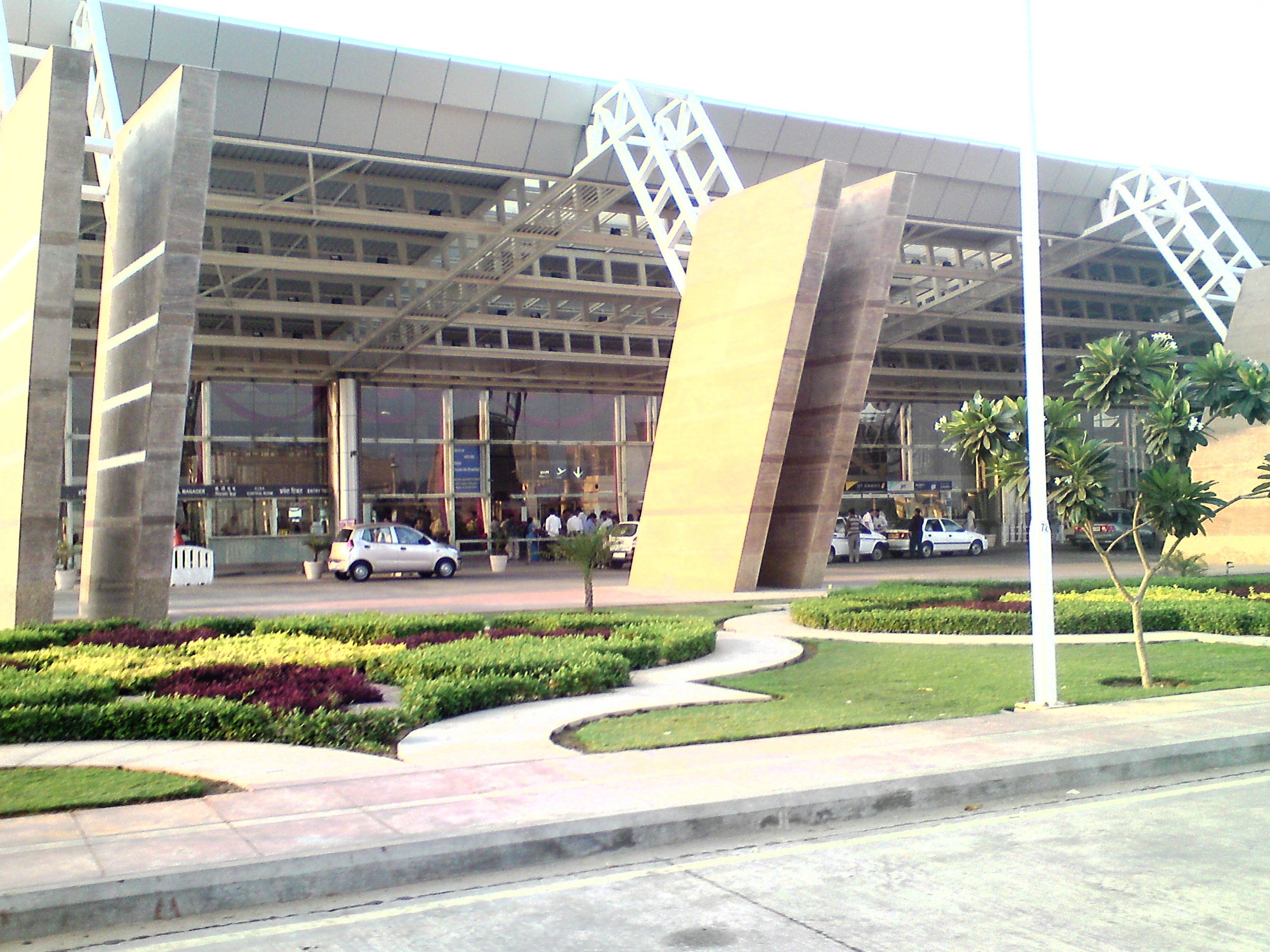
Protocol leaves no room for discretion once a hijack code appears. The aircraft was diverted to Jaipur, landed at Jaipur International Airport at about 9:35 a.m., and was moved to an isolation bay within ten minutes, police sources told PTI. A multi-agency security operation followed: teams from the Central Industrial Security Force (CISF), local police and the Bomb Detection and Disposal Squad (BDDS) inspected the aircraft, passenger baggage and cargo holds. The Times of India reported that the National Security Guard (NSG) was also placed on standby in New Delhi.

Passengers were taken to the terminal building, where Jaipur airport management told PTI that everyone was safe and there was no panic. Once the checks were done, the Aerodrome Committee concluded the threat alert had been resolved and cleared the aircraft and crew. The same crew flew the onward leg: the plane left Jaipur at 2:37 p.m. and landed at Delhi's Indira Gandhi International Airport at about 3:10 p.m.
Air India said in a statement: "Air India flight AI2030 operating from Frankfurt to Delhi on Oct 14 was diverted to Jaipur following a perceived security concern. The aircraft landed safely in Jaipur. The relevant security agencies carried out the necessary checks and have cleared the aircraft and crew. All passengers disembarked, underwent security checks, and have since reboarded the aircraft."
DGCA Probe: Mumbai ATC Radar Under Scanner
A senior official told The Hindu that the DGCA will be investigating the incident, and Gulf News reported that the regulator is examining the ATC system for a possible technical error. According to Outlook, investigators are now focusing on a newly installed air traffic control radar system in Mumbai — the suspicion being that it generated the false warning on the ground.
That theory is strengthened by what senior Boeing 787 pilots told The Times of India. They put the chance of code 7500 being set inadvertently on the aircraft at "one in a trillion" — because on a 787, each of the four digits must be physically entered through the cockpit controls, and there is no single button that can be pressed by mistake. With no such signal reported from the cockpit, the outlet reported, attention has shifted to the ground-based ATC system.

One account, however, muddies the picture. The Hindu's reporting carried two conflicting versions: one source said the Pilot-in-Command had transmitted Code 7500, which was later judged to have been activated by a technical glitch; another claimed the pilot never pressed the code and had told Ahmedabad ATC — which falls under the Mumbai Flight Information Region — the same. Separately, senior air traffic controllers told The Times of India that Mumbai ATC has a new system and that a software error was "unlikely."
The truth is that the exact cause remains unestablished — all four outlets agree on that, and Outlook explicitly notes a technical anomaly in the ATC system is a possibility to be verified, not a confirmed radar malfunction. One senior ATC official explained the stakes to The Times of India: when a pilot squawks 7500, the aircraft's dot on the radar screen turns red and an alarm goes off. A false 7500 is among the most serious false alarms an ATC system can produce.
Why It Matters
False hijack alerts are rare precisely because the consequences are so expensive. A full-scale security response — isolation bay, CISF, bomb squads, NSG on standby, 306 people screened and their baggage re-checked — is built for a real emergency. Triggered by a system error, the bill lands on passengers, airports and airlines, and it chips away at confidence in the safety net itself.
Mumbai ATC is handling more en-route traffic than before, as Indian aircraft take longer routes around closed Pakistani airspace. If a newly installed radar system can hallucinate a hijack code, that's not a curiosity — it's a safety question the DGCA now has to answer in public.
What Happens Next
The DGCA has yet to release a final finding. Investigators will now reconstruct the radar data from Mumbai ATC's new system, examine the transponder logs from VT-TSE, and reconcile the conflicting accounts of whether the code originated in the cockpit or on the ground. Aviation and security agencies are both involved in the probe.

Key Takeaways
- The DGCA is investigating whether a Mumbai ATC radar glitch triggered the false hijack alert on Air India flight AI2030 — a new development reported on October 15, 2026.
- Flight AI2030 (Frankfurt to Delhi, Boeing 787-9 VT-TSE) was diverted to Jaipur on October 14 after squawk code 7500 appeared on Mumbai ATC radar, while the pilots insisted everything was normal.
- 293 passengers and 13 crew were screened in Jaipur; the flight resumed and reached Delhi at about 3:10 p.m. the same afternoon.
- Senior 787 pilots say an accidental 7500 setting is "one in a trillion" — each digit must be entered manually — pushing suspicion toward the ground-based ATC system.
- The exact cause is unconfirmed; investigators are examining Mumbai ATC's newly installed radar system.
Frequently Asked Questions
What is squawk code 7500?
Squawk code 7500 is the internationally recognised transponder code signalling hijacking or unlawful interference. When it appears on a controller's radar, the aircraft's target turns red and an alarm sounds, triggering a full security response. Code 7600 denotes a general emergency and 7700 a communication failure.
Why was Air India flight AI2030 diverted to Jaipur?
Flight AI2030, operating from Frankfurt to Delhi on October 14, 2026, was diverted to Jaipur after Mumbai air traffic control saw the aircraft squawking code 7500, the hijack code. Aviation security protocol requires diversion even when the crew reports no emergency — and the pilots told ATC everything was normal on board.
How many people were on board Air India flight AI2030?
The Boeing 787-9 was carrying around 293 passengers and 13 crew members — 306 people in total, according to The Hindu and Gulf News. All were screened during the security checks in Jaipur before the flight was cleared to continue to Delhi.
What has the DGCA investigation found about the Mumbai ATC radar?
The investigation is ongoing and the exact cause has not been established. The DGCA is examining Mumbai's ATC system for a possible technical error, with investigators specifically looking at a newly installed radar system as the possible source of the false warning.
Did the pilots trigger the hijack code by mistake?
Sources disagree. One account reported by The Hindu said the code was activated by a technical glitch after being transmitted, while another source said the pilot never pressed it and informed Ahmedabad ATC of the same. Senior 787 pilots told The Times of India an accidental setting is "one in a trillion" because each digit must be entered by hand.
Was anyone hurt in the Air India false hijack scare?
No. There was no actual hijack threat, and Air India confirmed that security agencies cleared the aircraft and crew. Passengers were taken to the terminal building in Jaipur, where airport authorities said everyone was safe and there was no panic among travellers.
When did Air India flight AI2030 reach Delhi?
After security clearance in Jaipur, the flight departed at 2:37 p.m. and landed at Delhi's Indira Gandhi International Airport at about 3:10 p.m. on October 14, 2026, with the same crew on the flight deck.
By GlobalDeskNews Staff
Sources
- The Hindu, "Air India Frankfurt-Delhi flight diverted to Jaipur after hijack alert, resumes journey after checks" (October 15, 2026): full report
- Gulf News, "Air India hijack scare: ATC glitch suspected as flight reaches Delhi safely" (October 15, 2026): full report
- The Times of India, "Hijack code 7500 appeared, pilots said all normal: The mystery behind Air India's Frankfurt-Delhi flight scare" (October 14, 2026): full report
- Outlook, "Air India False Hijack Alert: DGCA Probes Mumbai ATC Radar As Frankfurt-Delhi Flight Diverted" (October 15, 2026): full report
Related on GlobalDeskNews: Nuremberg Airport Emergency: Eurofighters Escort Corfu Flight · Pakistan Army Aircraft Crash in Quetta Kills Two Pilots · Riyadh Airport Shut Until October 17 After Missile Attacks