
NUREMBERG, Germany — A Nuremberg airport emergency suspended all flight operations on Tuesday after authorities declared an aviation alert involving a passenger flight inbound from the Greek island of Corfu. The aircraft was intercepted by German Air Force Eurofighter jets and brought in to land safely, triggering a full security lockdown at the airport and diverting incoming flights across southern Germany.
The airport said on its website that "flight operations have been suspended for the time being," describing the situation as an "aviation emergency" in a statement that referred directly to the flight from Corfu, which it confirmed had "landed safely."
The Nuremberg airport emergency unfolded rapidly around midday local time. According to local police, an emergency report was received from the cockpit of the plane shortly after 11 a.m. The aircraft, identified by flight-tracking data as Corendon Airlines flight XR456, was then escorted into Nuremberg by Eurofighter jets. It touched down safely at about 12:16 p.m. local time, but the airport had already been closed to air traffic by then as police secured the site.
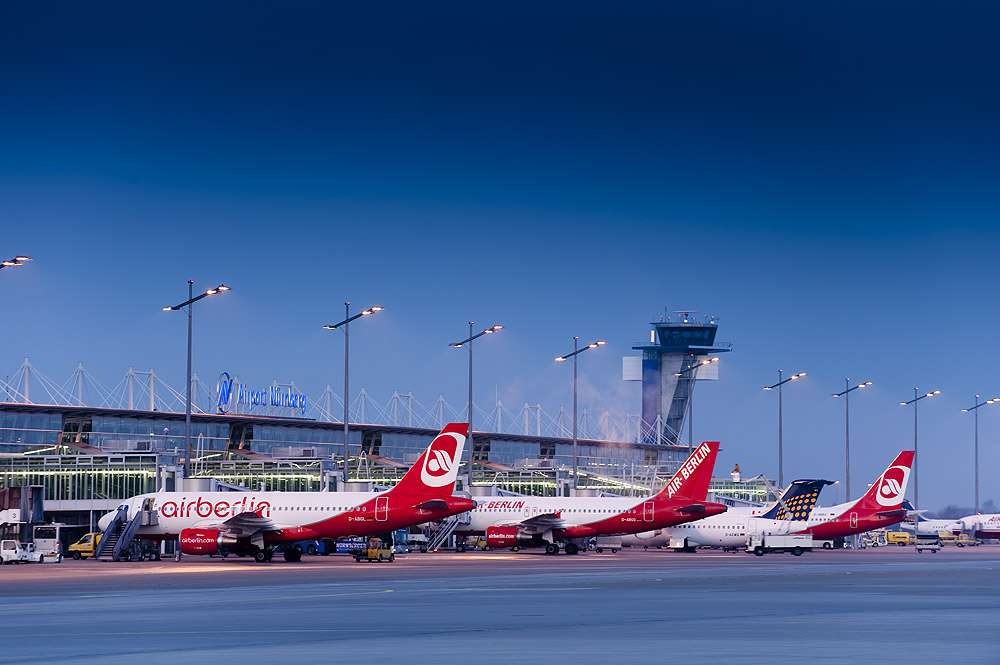
Nuremberg Airport Emergency: What Happened on Tuesday
The timeline of the incident, pieced together from police statements, airport announcements, and flight-tracking data, shows how seriously German authorities treated the alert:
- 8:15–8:28 a.m. UTC (1:15–1:28 p.m. PKT): During its departure from Corfu, flight XR456 transmitted squawk 7500 — the transponder code used to signal a possible hijacking — according to flight-tracking service Flightradar24. The code was active for roughly 13 minutes.
- Shortly after 11 a.m. local time (2 p.m. PKT): Police received an emergency report from within the cockpit of the aircraft.
- Around noon local time (3 p.m. PKT): Nuremberg Airport closed to air traffic as a police operation got underway. Eurofighter jets were scrambled to escort the incoming flight.
- 12:16 p.m. local time (3:16 p.m. PKT): The Corendon Airlines Boeing 737 landed safely at Nuremberg.
- After landing: Special response units were deployed, the aircraft and surrounding premises were searched, and incoming flights were diverted to Munich, Frankfurt, and Stuttgart.
Eurocontrol, which coordinates European air traffic, listed Nuremberg Airport as closed until 14:00 UTC (7 p.m. PKT), with XR456 recorded as the last flight to land at 10:16 UTC.

Why Eurofighters Were Scrambled
The decision to send up military jets is not taken lightly, and it underlined how seriously the alert was handled. When an aircraft transmits the hijack code or an unclear emergency report reaches authorities, the German Air Force's quick-reaction alert fighters are standard protocol — their job is to make visual contact, assess the situation, and stand ready until the aircraft is safely on the ground.
Local police stressed, however, that the outcome was reassuring. In a post on X, they wrote: "The aircraft in question is a scheduled flight from Corfu, which landed in Nuremberg as planned. On-site inspections have determined that there is no danger."
Police also told CNN there is currently no danger and that everyone on board is safe. They added that the precise nature of the emergency had not been confirmed and that investigations into the cause are underway.

The Drone Sightings Earlier in the Day
Tuesday's midday drama compounded an already disrupted morning at the airport. Between about 2 a.m. and 4 a.m. local time, three pilots independently reported seeing an unidentified object — suspected to be an unauthorised drone — near the airfield during takeoff or landing.
The reports prompted a precautionary security operation involving border police, airport management, and German air traffic control. A police helicopter joined the search, but police spokesperson Michael Petzold said the measures did not result in confirmation of the reported object. No trace of a drone was recovered.
The overnight Nuremberg airport drone sighting disruption affected six flights: two arriving aircraft diverted temporarily to Cologne and Prague before continuing to Nuremberg, while four departing flights were delayed.
Crucially, police later told CNN that Tuesday's midday incident was not related to the reported drone sightings — a distinction that matters as German authorities continue to investigate the morning reports separately.
Why It Matters
Nuremberg is Bavaria's second-largest city and a major regional transport hub, and its airport handles around four million passengers a year. Any prolonged suspension ripples through airline schedules, passenger connections, and aircraft movements across the region — which is why diversions to Munich, Frankfurt, and Stuttgart were triggered within minutes.
The incident also lands amid heightened scrutiny of suspected drone activity around German airports and critical infrastructure. Several European airports have faced drone-related disruptions in recent weeks, and Germany's interior authorities have been under pressure to tighten counter-drone defences. Against that backdrop, the double alert at Nuremberg — the overnight sightings and then a hijack-code squawk on an inbound jet — was always going to get the full emergency treatment.
For travellers, the episode is a reminder of how quickly normal operations can stop when security is in play: one transponder code, transmitted for thirteen minutes over the Mediterranean, set off a chain that ended with fighter jets over Bavaria.
What Happens Next
Investigations are now running on two tracks. Police and the airport are working to establish what prompted the emergency report and the squawk 7500 transmission — whether it was a technical fault, crew action, or something else entirely. Separately, the border police inspectorate is continuing its inquiry into what the three pilots saw overnight.
Further information from police, airport authorities, and the German military is expected to clarify why the Eurofighters were deployed and what led to the temporary suspension. Until then, the official line stands: the aircraft landed safely, no danger was found, and the cause remains under investigation.
Key Takeaways
- Nuremberg Airport suspended all flight operations on Tuesday, 13 October 2026, over an aviation emergency involving an incoming Corfu flight.
- Flight XR456, operated by Corendon Airlines, transmitted the hijack-alert transponder code squawk 7500 shortly after departing Corfu.
- German Air Force Eurofighter jets were scrambled to escort the Boeing 737, which landed safely at Nuremberg at 12:16 p.m. local time.
- Police confirmed there is no danger and everyone on board is safe; the cause of the emergency remains under investigation.
- Incoming flights were diverted to Munich, Frankfurt, and Stuttgart during the closure.
- Overnight drone sightings at the airport were investigated separately — police say the two incidents are not related.
Frequently Asked Questions
Why was Nuremberg Airport closed today?
Nuremberg Airport suspended all flight operations on Tuesday, 13 October 2026, after authorities received an emergency report from the cockpit of an incoming flight from Corfu. The airport closed to air traffic around noon local time while police secured the site and investigated the situation.
Which flight was involved in the Nuremberg airport emergency?
The aircraft was Corendon Airlines flight XR456, a scheduled service from the Greek island of Corfu to Nuremberg. Flight-tracking data shows it transmitted squawk 7500 — the transponder code signalling a possible hijacking — for about 13 minutes during its departure from Corfu.
Why were Eurofighter jets scrambled?
Eurofighter jets were deployed as a standard precaution once the emergency report was received. Military aircraft accompanied the flight into Nuremberg, made visual contact, and returned to base after the aircraft landed safely. The German Air Force uses quick-reaction fighters for exactly this kind of unclear airborne alert.
Is everyone on board safe?
Yes. Local police told CNN there is currently no danger and everyone on board is safe. Police posted on X that on-site inspections of the aircraft and the surrounding premises found no danger, and the flight landed as planned after the checks were completed.
Were the drone sightings connected to the emergency?
No, according to police. Three pilots reported a suspected drone-like object near the airport between 2 a.m. and 4 a.m. on Tuesday, but a helicopter search found nothing. Police later told CNN that the midday aviation emergency was not related to the drone sightings.
Are flights operating normally now?
Eurocontrol listed the airport as closed until 14:00 UTC (7 p.m. PKT), and the airport said normal operations would resume progressively as security clearances were finalised. Passengers were advised to check with their airlines for updates on diversions and delays.
GlobalDeskNews Staff | 13 October 2026
Sources
- CNN, "Germany's Nuremberg airport closes due to aviation emergency," 13 October 2026 — cnn.com
- AIRLIVE, "Nuremberg Airport Shuts Down Following In-Flight Emergency and Fighter Jet Escort," 13 October 2026 — airlive.net
- The Aviation Hub, "Nuremberg Airport Shut After Aviation Emergency," 13 October 2026 — theaviationhub.co.uk
Related: Riyadh Airport Attack Kills 12: Houthis Claim Deadly Strike on Saudi Capital · Riyadh Airport Shut Until October 17 After Second Attack