
The United States military has drawn up fresh strike plans that include the potential use of its largest non-nuclear bomb — the GBU-43/B Massive Ordnance Air Blast, known as the “Mother of All Bombs” — against Iranian energy infrastructure and nuclear sites, if President Donald Trump orders a resumption of combat operations. CNN reported the plans on Thursday, October 15, citing multiple US officials familiar with the military planning, in what would mark a significant escalation of the war with Iran.
This is a new development in a conflict that erupted in February with US-Israeli strikes on Iran and has been at an impasse since the summer. Washington has in recent weeks dialled back military operations in favour of economic pressure, according to AFP. The CNN report, carried widely on Thursday, suggests the Pentagon is nevertheless preparing options for a possible return to heavier combat.
One source familiar with the military planning told CNN that Trump had ordered additional strike packages covering “a lot of energy infrastructure,” with the possibility of using the MOAB. A second source said plans for attacks on Iranian nuclear facilities, including a suspected underground site at Pickaxe Mountain, explicitly included the bomb.
What the mother of all bombs report says about Iran strike plans
The existence of these plans does not mean a strike has been authorised. A White House official told CNN that the administration does not comment on sensitive military plans “that may or may not exist,” adding that Trump “keeps all options on the table to ensure that Iran can never have a nuclear weapon.” The Pentagon said it plans for a wide range of operational scenarios to carry out presidential and defence secretary directives.
That caveat matters. Military planners routinely prepare options their political leaders never use. But the inclusion of the MOAB — a weapon of enormous symbolic weight — signals that the administration is at least weighing a show of force far beyond anything deployed in this conflict so far.

Why officials doubt the MOAB could destroy Iran’s underground sites
Even as the plans take shape, officials familiar with them have raised doubts about whether the bomb could achieve Washington’s military objectives — particularly the destruction of suspected underground nuclear sites.
“The MOAB is a massive information operation type weapon that is great for huge area clearance but not much else,” a source familiar with the plans told CNN. “It is definitely not designed as a deep penetration warhead.”
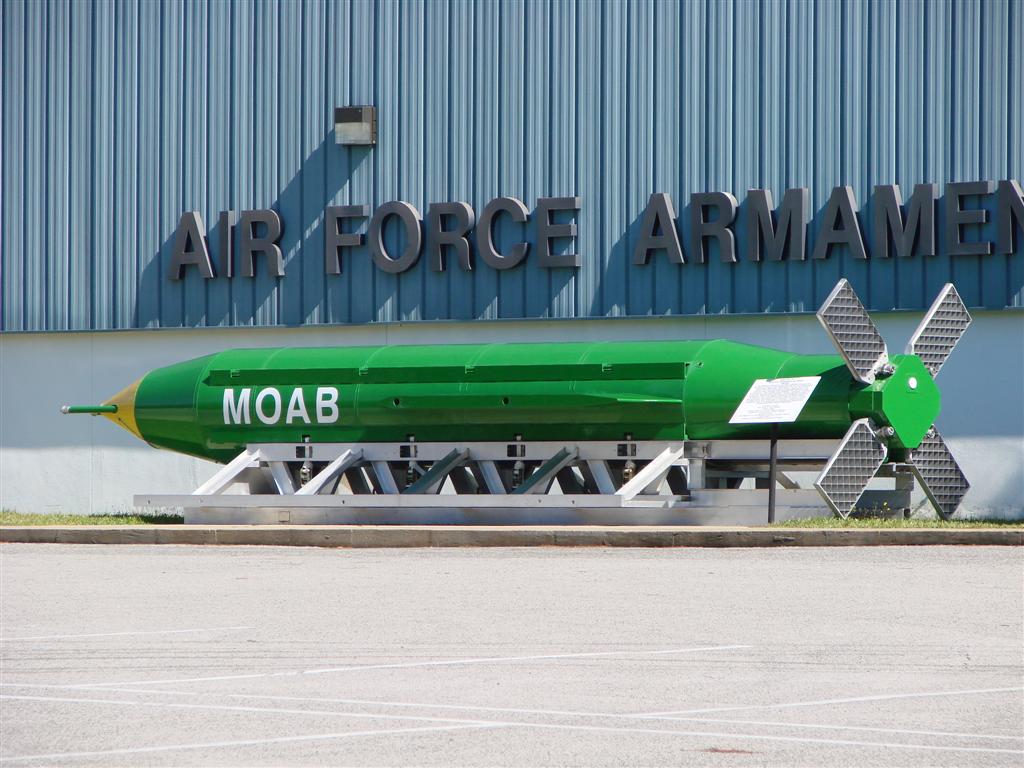
The distinction is a technical one with strategic consequences. The MOAB weighs 21,600 pounds, about 9.8 tonnes, and detonates before hitting the ground, projecting an enormous blast outward. According to CNN, it can destroy an area equivalent to about nine city blocks, making it suited to large-area targets rather than deeply buried facilities.
CNN reported that sources questioned whether the bomb could penetrate deeply enough to destroy the suspected facilities at Pickaxe Mountain, believed to be protected by layers of granite, or other nuclear sites located far underground. There are also concerns over civilian casualties from such a huge weapon, particularly if it were used against energy infrastructure near populated areas.
Military planners have nevertheless considered the MOAB partly for its psychological value. The weapon was developed during the Iraq War and conceived in part for psychological effect: its enormous explosion was intended to intimidate enemy forces and pressure them to surrender or avoid fighting. One source told CNN the weapon could be used to alter the conflict’s current course, even if it was unlikely to force Iran to capitulate or deliver a decisive military victory.

Midterms, stalled diplomacy and the timing of the Iran war escalation
The report lands at a politically charged moment. Trump is trying to boost his low approval ratings ahead of November’s midterm elections, with polls showing the unpopular war in Iran and the fuel and other price rises it has caused are hurting his Republican Party, AFP reported.
Diplomatic efforts to end the conflict, which the United States and Israel have said was necessary to prevent Iran from acquiring nuclear weapons — a goal Tehran has long denied pursuing — have been at an impasse since the summer. The Trump administration is weighing its options for ending a war that has continued for more than six months, with little indication of an imminent diplomatic breakthrough.
CNN also reported that the US military was preparing for possible Iranian retaliation if Trump authorised further attacks, despite the president’s recent pledge to hold off on new strikes before the midterm elections. There has been no reported decision to deploy the MOAB against Iran.
The MOAB has been used in combat only once. In April 2017, during Trump’s first presidency, the US military dropped it on an Islamic State tunnel complex in Afghanistan. Afghan officials said the strike killed 36 Islamic State fighters and destroyed tunnels, weapons and ammunition, while US and Afghan officials said no civilians were killed.

Why it matters
The potential use of the MOAB would mark a significant escalation in the US campaign against Iran — and a sharp reversal from Washington’s recent posture of dialling back military operations in favour of economic pressure. For readers, the stakes are concrete: the war has already pushed up fuel prices and rattled energy markets, and any return to major combat — let alone the deployment of a weapon of this scale — would deepen those effects worldwide. The Strait of Hormuz tanker attacks and the Houthi strike on Aramco’s headquarters have already shown how the conflict spills across the region’s energy arteries.
What happens next
All eyes are now on two things: whether Trump authorises any of the strike packages CNN described, and whether the Pentagon’s planning translates into action before or after the midterms. Iran, for its part, has given no public response to the CNN report. If Washington does resume major combat, planners are already bracing for Iranian retaliation — a reminder that every escalation in this war has carried a price beyond the strike itself.
Key Takeaways
- The US military has prepared strike plans that include using the GBU-43/B MOAB against Iranian energy and nuclear targets, CNN reported on October 15.
- Targets under discussion include energy infrastructure and the suspected nuclear site at Pickaxe Mountain, according to officials familiar with the planning.
- The White House has not confirmed the report; a White House official said Trump “keeps all options on the table.”
- US officials themselves doubt the MOAB could destroy deeply buried nuclear sites, calling it not a “deep penetration warhead.”
- No decision to deploy the bomb has been reported; its inclusion in planning signals consideration, not authorisation.
- The report comes as Trump faces low approval ratings ahead of November’s midterms and a diplomatic stalemate with Iran.
FAQs
What is the “mother of all bombs”?
The GBU-43/B Massive Ordnance Air Blast (MOAB) is the largest non-nuclear bomb in the US arsenal. It weighs 21,600 pounds (about 9.8 tonnes) and is designed to produce an enormous blast across a wide area. Unlike a bunker-buster, it detonates before hitting the ground, projecting its blast outward.
Is the US planning to drop the MOAB on Iran?
The US military has included the MOAB in fresh strike plans against Iranian energy infrastructure and nuclear sites, CNN reported on October 15, citing multiple US officials. However, the existence of these plans does not mean a strike has been authorised. The White House declined to comment on sensitive military plans.
Could the MOAB destroy Iran’s underground nuclear sites?
US officials familiar with the planning doubt it. One told CNN the weapon is “definitely not designed as a deep penetration warhead” and is suited to large-area clearance rather than destroying suspected underground facilities at sites like Pickaxe Mountain.
What is Pickaxe Mountain?
According to CNN’s reporting, Pickaxe Mountain is a site where Washington and Israel believe Iran has stored components of its nuclear program. It is believed to be protected by layers of rock, which is why officials question whether the MOAB could destroy it.
Has the MOAB ever been used in combat?
Yes, once. In April 2017, during Donald Trump’s first presidency, the US military dropped a MOAB on an Islamic State tunnel complex in Afghanistan. Afghan officials said the strike killed 36 Islamic State fighters; US and Afghan officials said no civilians were killed.
Why is this report coming now?
The war between the US, Israel and Iran has been at an impasse since the summer, and Trump is facing low approval ratings ahead of November’s midterm elections. The administration is weighing options for ending the conflict while securing an outcome Trump could present as a victory.
What has been Iran’s response?
Iran has given no public response to the CNN report. Tehran has long denied pursuing nuclear weapons, which the US and Israel say the war is necessary to prevent.
By GlobalDeskNews Staff | 15 October 2026
Sources
- The Straits Times / AFP — “US considers hitting Iran with ‘Mother of All Bombs’: CNN” (15 October 2026) — straitstimes.com
- The Times of India — “What is the ‘Mother of All Bombs’? The massive US weapon in focus over Iran” (15 October 2026) — timesofindia.indiatimes.com
- New Indian Express — “US considers hitting Iran with ‘Mother of All Bombs’: CNN” (15 October 2026) — newindianexpress.com
- A News — “US considering using ‘mother of all bombs’ against Iran” (15 October 2026) — anews.com.tr
- The Cable — “Report: Trump considering deploying ‘mother of all bombs’ in Iran” (15 October 2026) — thecable.ng
Related on GlobalDeskNews: Strait of Hormuz Tanker Attack: Unknown Projectile Sparks Fire | Houthi Missiles Hit Aramco HQ, Riyadh | Iran Claims Strike on LPG Tanker in Hormuz | Houthis Vow More Attacks on Saudi Airports, Oil Facilities