
The United States woke up on Sunday to a new and dangerous phase of the Middle East conflict: a US citizen is now among the dead from the missile strike on Riyadh's international airport. Secretary of State Marco Rubio confirmed the American death late Saturday, writing on X that Washington "strongly condemns" the Houthi attacks on Saudi Arabia. "These reprehensible attacks demonstrate a blatant disregard for innocent civilian life. They must stop now," Rubio said.
It is the first confirmed American death in the Houthis' week-long campaign against Saudi airports — and it landed just hours after President Donald Trump told reporters the United States could join Saudi Arabia in striking the Iran-backed group. The Rubio confirmation turned a Saudi emergency into a US foreign-policy crisis overnight.
Rubio confirms American killed in Riyadh airport attack
Rubio's statement was short but unmistakable. The secretary of state said Washington strongly condemns recent Houthi attacks on the Kingdom of Saudi Arabia, including the Saturday attack on King Khalid International Airport — and confirmed that the attack killed an American. It is the highest-level US acknowledgment yet of the human cost of the strikes, which have shut down the kingdom's busiest airport and shaken its defenses.
The confirmation followed Saudi Arabia's civil aviation authority (GACA), which said early Sunday that Saturday's attack killed 12 people and wounded 309. The dead included four Saudis, two Bangladeshis, and one national each from the United States, Egypt, Jordan, Syria, Palestine and Sudan. GACA said all of the wounded were receiving care at several hospitals, with some in critical condition.
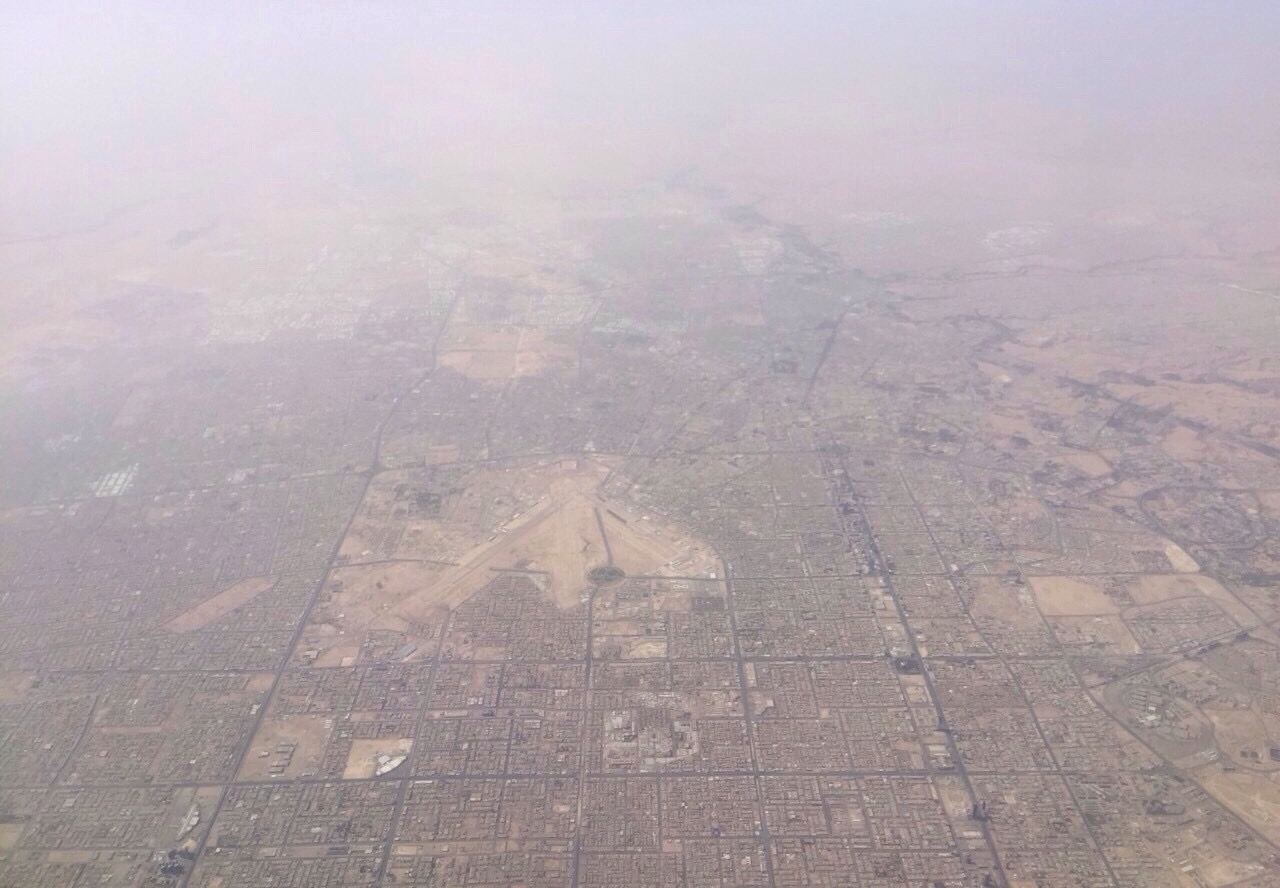
Trump: the US "may" join Saudi strikes on the Houthis
Asked Saturday whether Washington planned to join Saudi strikes on the Houthis, Trump left the door wide open. "We may," he told reporters outside the White House. "We're going to look at it. We just found out about the recent attack, so we'll make a decision. We move very quickly."
The remark, reported by CNN and the New York Post, is the strongest signal yet that the United States could enter the Saudi-Houthi fight directly. Al Jazeera's live coverage reported that Trump said the US may join Saudi Arabia in attacking the Houthis following the latest Riyadh airport attack, and will also consider hitting Iran. A US strike on the Houthis would mark a sharp escalation of the US-Israeli war with Iran that began in February.

US Embassy tells Americans to avoid the airport
The US Embassy in Riyadh said it was "aware of attacks" and "strongly recommends all US citizens avoid this airport and surrounding areas." The advisory followed travel warnings from the US, UK, Germany, Spain and Canada against using the Riyadh airport. US airlines and regional carriers have also reacted: Kuwait Airways, Etihad Airways and Qatar Airways have shuttered travel between their hubs and Riyadh into Monday, and nearly 300 flights were cancelled on Saturday, according to flight-tracking data.
What we know about Saturday's attack
Saturday's strike was the third attack this week on King Khalid International Airport. The missile hit a passenger-terminal area, and witnesses described at least two loud blasts that shook the capital, with plumes of black smoke rising from the airport. "Everyone was running," a witness told Agence France-Presse as the airport was being evacuated. One injured traveler told Reuters they saw something fly across the sky outside the airport before part of a departure-gate ceiling collapsed. A Reuters-verified video showed ambulances rushing toward the facility.
All flights were diverted from Riyadh on Saturday and airport operations were temporarily suspended while damage was assessed. The Saudi-led military coalition vowed to respond to the attack.

The Houthis claimed responsibility for Saturday's attack, saying it was retaliation for Saudi Arabia's renewed bombing campaign against the group across the border in Yemen. The head of the Houthi media office said in a post on X after the attack that the group had "shut down Riyadh international airport." The Houthis have declared Saudi airspace a zone of military operations and told airliners to avoid it.
The night did not end there. The Saudi-led coalition said a projectile fell near King Fahd International Airport in Dammam — the kingdom's eastern hub — and that a Houthi-launched missile was intercepted southeast of Riyadh. Al Jazeera's live blog reported early Sunday that the coalition also said it intercepted and destroyed a drone in eastern Saudi Arabia, according to coalition spokesman Turki al-Maliki. Yemen's government forces, meanwhile, said they carried out more than 1,900 targeting operations in the past 24 hours.

Why it matters
An American death changes the math for Washington. Rubio's confirmation means the Houthi campaign has now killed a US citizen on allied soil — the kind of event that forces a president's hand. Trump had been weighing a US role for weeks; Saturday's attack may have settled the argument. The strike is also the deadliest on a Gulf Arab country since the US-Israeli war with Iran began in February, and it exposed gaps in Saudi Arabia's defenses: Saturday's missile arrived with no warning from the kingdom's threat-warning system.
There is a regional dimension too. The Houthis have spent the week pushing Saudi Arabia's airport campaign deeper into the kingdom — Riyadh, then the eastern hub at Dammam — while Yemeni government forces press their ground offensive. With the US Embassy warning Americans away from Riyadh airport and foreign carriers cancelling services, the conflict is now disrupting one of the world's busiest travel corridors.
What happens next
Three things to watch. First, the coalition's promised response: Saudi Arabia has vowed to retaliate for the attack, and Friday's "large-scale operations" destroyed more than 130 Houthi targets, according to coalition figures. Second, Trump's decision on whether the US joins the strikes — he said it would come "very quickly." Third, Riyadh's airport itself: operations were suspended Saturday for damage assessment, and the suspension of flights by Kuwait Airways, Etihad and Qatar Airways into Monday suggests the kingdom expects the threat to persist.
Key takeaways
- Secretary of State Marco Rubio confirmed an American citizen was among the 12 people killed in Saturday's Houthi-claimed missile strike on Riyadh's King Khalid International Airport.
- Rubio called the attacks "reprehensible" and said they "must stop now," the strongest US condemnation of the Houthi campaign to date.
- President Trump said the US "may" join Saudi retaliatory strikes against the Houthis and would decide "very quickly."
- Saudi authorities put the toll at 12 killed and 309 wounded; the dead included four Saudis, two Bangladeshis and one national each from the US, Egypt, Jordan, Syria, Palestine and Sudan.
- The US Embassy in Riyadh told Americans to avoid the airport; nearly 300 Saturday flights were cancelled and regional carriers suspended Riyadh services into Monday.
- The coalition said it intercepted a missile southeast of Riyadh and destroyed a drone in eastern Saudi Arabia; a projectile also fell near Dammam airport.
Frequently asked questions
How many Americans were killed in the Riyadh airport attack?
One. US Secretary of State Marco Rubio confirmed overnight that an American citizen was among the 12 people killed in Saturday's missile strike on King Khalid International Airport. Saudi Arabia's civil aviation authority listed the dead as four Saudis, two Bangladeshis, and one national each from the United States, Egypt, Jordan, Syria, Palestine and Sudan, with 309 wounded.
What exactly did Marco Rubio say about the attacks?
In a post on X, Rubio said the United States "strongly condemns" the Houthi attacks on Saudi Arabia, including the Saturday airport attack. He wrote: "These reprehensible attacks demonstrate a blatant disregard for innocent civilian life. They must stop now." It was the strongest US condemnation of the Houthi campaign so far.
Will the United States join Saudi strikes against the Houthis?
President Trump has not decided. Asked Saturday whether Washington would provide military support to Saudi Arabia, he said: "We may. We're going to look at it. We just found out about the recent attack, so we'll make a decision. We move very quickly." Al Jazeera's live coverage reported he would also consider hitting Iran. No US strike has been announced.
Is Riyadh's King Khalid airport open?
Operations were temporarily suspended on Saturday while authorities assessed the damage and verified the safety of airport facilities. All Saturday flights were diverted or cancelled — nearly 300 in total — and Kuwait Airways, Etihad Airways and Qatar Airways have shuttered travel between their hubs and Riyadh into Monday. Travelers should confirm flight status before departing.
Who was behind the Riyadh airport attack?
The Houthis claimed responsibility for Saturday's attack, saying it was retaliation for Saudi Arabia's renewed bombing campaign against the group in Yemen. The head of the Houthi media office said on X that the group had "shut down Riyadh international airport." The Saudi-led military coalition has vowed to respond.
What should travelers know about the warnings?
The US Embassy in Riyadh says it is "aware of attacks" and "strongly recommends all US citizens avoid this airport and surrounding areas." The US, UK, Germany, Spain and Canada have all warned citizens against using the Riyadh airport. The EU's aviation safety agency has also expanded its guidance on Saudi airspace, citing the Houthis' deeper reach.
What was the toll from the attack?
Saudi Arabia's General Authority of Civil Aviation said early Sunday that Saturday's attack killed 12 people and injured 309. Hospitals in Riyadh were flooded with wounded brought by ambulance and helicopter, with some patients in critical condition. The attack was the deadliest on a Gulf Arab country since the US-Israeli war with Iran began in February.
Sources
- CNN — "Attack on Saudi airport leaves at least 12 dead, 309 wounded": cnn.com
- New York Post — "American among 12 dead after Iran-backed Houthis strike Saudi airport": nypost.com
- Al Jazeera — "Iran war live: 12 killed in Riyadh, US weighs joining fight against Houthis": aljazeera.com
- Saudi Gazette — "12 killed, 309 injured in attack on Riyadh airport, GACA confirms": saudigazette.com.sa
Related on Global Desk News:
- Saudi Confirms 12 Killed, 309 Wounded in Riyadh Airport Attack
- Riyadh Airport Attack Kills 12, Houthis Claim Responsibility
- Houthi Missile Intercepted Near Saudi-US Al-Kharj Airbase
- Saudi Coalition Says Projectile Fell Near Dammam Airport
By GlobalDeskNews Staff