
ISLAMABAD — Pakistan's Adviser to the National Command Authority, retired Lt Gen Khalid Kidwai, warned on Tuesday that Islamabad would not accept any Indian attempt to alter the strategic balance in South Asia. "Pakistan never has and never will accept strategic imbalances to be induced in South Asia," he said at the second Islamabad Non-Proliferation Conference, hosted by the Strategic Vision Institute, an Islamabad-based think tank specialising in strategic issues.
Kidwai, a former head of the Strategic Plans Division, said India was moving toward what he described as a more prepared, potentially first-use capable nuclear posture — a shift he called dangerously destabilising for the region.

Why Pakistan Warned India Over Its Nuclear Posture
Kidwai's central charge was that India's moves cast doubt on its declared No First Use policy. He pointed to India's reported deployment of nuclear weapons aboard a submarine, alongside missile modernisation and recent military confrontations, as developments that raise the risk of escalation between the two nuclear-armed neighbours.
"Pakistan will review and reconsider all options for appropriate deployments in order to restore the strategic balance and strategic stability while retaining the policy of strategic ambiguity," he added. He was joined at the conference by retired Lt Gen Sarfraz Sattar, a former adviser to the NCA; both men are former heads of the Strategic Plans Division.
The Submarine Claim: 12 Warheads and SIPRI's 2026 Yearbook
Kidwai's most specific claim was his citation of the Stockholm International Peace Research Institute's SIPRI Yearbook 2026. Citing the yearbook and other publicly available information, he said there were reports that India had deployed around 12 nuclear warheads on a submarine for deterrence patrols — suggesting, he said, that India had mated warheads with submarine-launched ballistic missiles and begun sea-based patrols. "I do not see any reason as to why an SIPRI report might be inaccurate or speculative," he said.
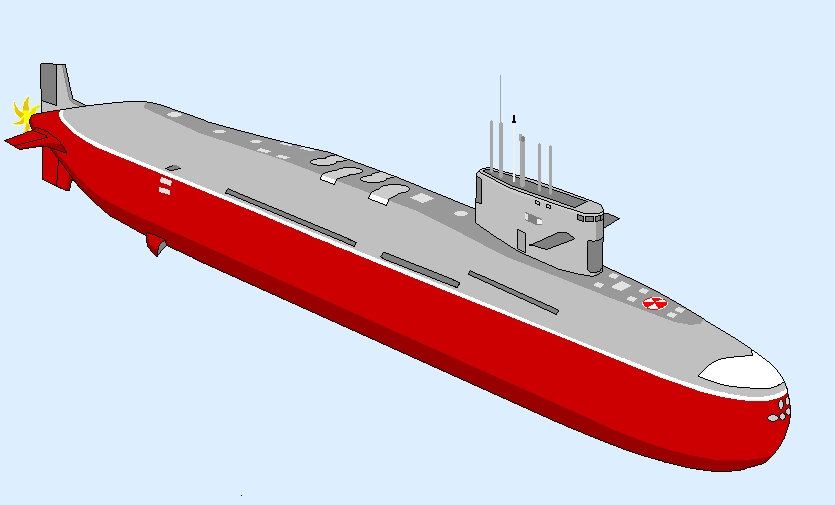
"The operational reality that emerges is that India can undertake a first strike against Pakistan at zero notice," he said. "This irresponsible escalatory transition towards creating asymmetry in nuclear posture will have profound destabilising effects on South Asian strategic stability."
Full Spectrum Deterrence: The Doctrine Pakistan Wants India to Re-Read
Kidwai closed with a pointed message for New Delhi: study Pakistan's doctrine — and take it seriously. "India in fact will be well advised to read and re-read Pakistan's policy of Full Spectrum Deterrence and seriously absorb its wide ranging implications for strategic deterrence, strategic stability, and for India's security," he said.
Full Spectrum Deterrence is Pakistan's stated policy of holding nuclear options across the entire spectrum of conflict, from tactical battlefield weapons to strategic strikes — meant, in Islamabad's telling, to deter Indian conventional superiority. "Pakistan reserves the right to undertake all appropriate measures to safeguard its national security and preserve strategic balance in the region under all circumstances," Kidwai said.
The May 2025 Conflict Hangs Over the Warning
Both speakers framed the warning against the May 2025 fighting — the most serious India-Pakistan confrontation in years. Sattar said it showed how fast conventional hostilities can escalate: the ceasefire came only after both sides used cruise and ballistic missiles and India deployed strategic naval assets, and the fighting — kamikaze drones, dual-capable BrahMos missiles, cyber and electronic warfare — had risked spiralling toward nuclear escalation by accident or miscalculation.
Kidwai drew a parallel with February 2019, when Indian aircraft carried out airstrikes near Balakot in Pakistan. India was also reported to have deployed its Arihant nuclear submarine in the Indian Ocean after those strikes, presumably with nuclear weapons aboard, he said.

"The future strategic stability in South Asia is placed on a perilous and worrisome course with heightened risk of misunderstanding and miscalculation, potentially leading to unintended or accidental escalation to the nuclear level," Sattar said.
Key Takeaways
- Khalid Kidwai, Adviser to Pakistan's National Command Authority, warned Tuesday that Pakistan will "review and reconsider all options for appropriate deployments" if India alters South Asia's strategic balance.
- He accused India of moving toward a first-use-capable nuclear posture, citing SIPRI Yearbook 2026 reports of about 12 Indian warheads on a submarine.
- Kidwai urged India to "read and re-read" Pakistan's Full Spectrum Deterrence policy, saying Pakistan "reserves the right" to take all appropriate measures.
- Fellow NCA adviser Sarfraz Sattar warned the May 2025 conflict showed how fast conventional fighting can edge toward nuclear escalation.
- The remarks came at the two-day Islamabad Non-Proliferation Conference, hosted by the Strategic Vision Institute.
Why It Matters
Kidwai is a former head of the Strategic Plans Division who now advises the National Command Authority, so his warning that Pakistan will "review and reconsider all options for appropriate deployments" is a deliberate public signal. It lands about seventeen months after the May 2025 conflict — which, by the speakers' account, involved ballistic missiles and strategic naval assets — at a time when both sides are modernising fast and, as Sattar noted, there is "the absence of a bilateral arms control mechanism."
What Happens Next
The two-day conference brings together Pakistani and international nuclear experts to examine deterrence and the lessons of the May 2025 conflict, according to Business Recorder. Neither Pakistani report carried an Indian reaction — whether New Delhi responds publicly, and whether Pakistan follows its words with visible steps, is what to watch in the weeks ahead.
Frequently Asked Questions
What exactly did Pakistan warn India about?
Kidwai warned that Pakistan "never has and never will accept strategic imbalances" in South Asia and said Islamabad will "review and reconsider all options for appropriate deployments" to restore the strategic balance. He accused India of moving toward a more prepared, potentially first-use capable nuclear posture, which he called dangerously destabilising.
What is the claim about 12 Indian nuclear warheads on a submarine?
Kidwai said that, citing the SIPRI Yearbook 2026 and other publicly available information, there were reports India had deployed around 12 nuclear warheads on a submarine for deterrence patrols. He said this suggested India had mated warheads with submarine-launched ballistic missiles. The claim is Kidwai's citation of SIPRI, not an independently verified fact.
What is Pakistan's Full Spectrum Deterrence policy?
Full Spectrum Deterrence is Pakistan's stated nuclear doctrine of maintaining deterrent options across the entire spectrum of conflict — from tactical battlefield weapons to strategic strikes. Islamabad presents it as a defensive posture meant to deter India's conventional military superiority and prevent aggression at any level of conflict.
What happened in the May 2025 India-Pakistan conflict?
According to the conference speakers, the May 2025 fighting was more intense than the 2019 confrontation, involving kamikaze drones, supersonic BrahMos missiles capable of carrying conventional or nuclear warheads, and cyber and electronic warfare. Both sides used cruise and ballistic missiles, and India deployed strategic naval assets before a ceasefire took hold.
Has India responded to Kidwai's warning?
Neither the Dawn nor the Business Recorder report on Kidwai's address carried any response from the Indian government. New Delhi has not publicly commented on the remarks in the reporting available so far.
By GlobalDeskNews Staff
Sources
- Dawn — "Pakistan warns India against attempt to alter strategic balance" (published October 21, 2026)
- Business Recorder — "India moving towards combat-ready nuclear force: NCA adviser" (published October 21, 2026)