
Quick Answer
Oil prices surged above $105 a barrel on Thursday, October 8, as a record wave of tanker attacks in the Strait of Hormuz and Hurricane Isaias shutdowns in the Gulf of Mexico hit supply at the same time. Brent crude jumped more than 5% to its highest since mid-September, while Houthi strikes on Saudi airports and reports of US strike planning against Iran added fresh fear.
Crude oil is suddenly very expensive again. Brent, the international benchmark, leapt past $105 a barrel on Thursday in its sharpest one-day rally in weeks, driven by a dangerous mix: a record number of attacks on tankers in the Strait of Hormuz, Houthi strikes deep inside Saudi Arabia, and a hurricane knocking a quarter of US offshore production offline.
At one point in the morning, Brent was up more than 5% before easing back to trade 4.8% higher at $105 a barrel around 8:30 a.m. ET, according to CNN. West Texas Intermediate, the US benchmark, climbed a similar margin to $92.48. December Brent futures ended 5.2% higher at $105.43 — the highest level since September 16, Barron's reported.

Four things are pushing prices up at once, according to Helge André Martinsen, an energy analyst at DNB Carnegie, speaking to The Wall Street Journal. First, a tanker was struck by projectiles off the coast of Qatar, the British navy-backed UK Maritime Trade Operations Centre reported. Martinsen said Iran appears to be intensifying its attacks on shipping in a bid to claw back its advantage over the United States in the contest to control flows through Hormuz — an analyst assessment, not an officially confirmed fact.
Second, attacks claimed by Yemen's Houthi militants damaged two Saudi airports this week, escalating a conflict that threatens oil shipments through the Red Sea. Third, The Atlantic reported that the White House has asked the Pentagon to develop strike options against Iranian targets that could be exercised before the November 3 midterm elections, citing unnamed sources. And fourth, Hurricane Isaias has forced oil producers to shut in production across the Gulf of Mexico.
"There is a clear tug-of-war at the moment between improving supply from the region and lingering threats to supply," commodities strategists at ING wrote in a note on Wednesday, quoted by CNN. "The only way to see prices trade sustainably lower is for lingering risks to be addressed."
Record tanker attacks in the Strait of Hormuz
The shipping data is what has traders most alarmed. Kpler, a maritime intelligence firm, said in a report on Thursday that 10 tankers were struck in the Strait of Hormuz between September 28 and October 4 — a record, well above the previous weekly high of six.
On Tuesday, just seven tankers made it through the strait, less than half the seven-day average and the lowest number since July 23, according to Kpler's preliminary figures. And on Wednesday, a tanker reported being hit by "multiple projectiles," causing casualties, the UK Maritime Trade Operations agency said.
"The frequency of Iranian attacks on ships is now at the highest point since the war began and likely to intensify further," said Saul Kavonic, MST Marquee's head of energy, speaking to The Times. The strait carried the equivalent of about 20% of global oil and fuel before the war, and Gulf oil flows had recovered to more than 80% of pre-war levels in September, Kpler data shows — which makes the attacks' escalation this month especially jarring.
Chris Beauchamp, chief market analyst at IG, said the pending US storm, along with an Axios report that Washington was preparing to resume major combat operations against Iran before the midterms, was keeping prices above $100 a barrel. "Investors certainly don't seem to be taking any chances," he said.
Hurricane Isaias shuts in Gulf of Mexico oil production
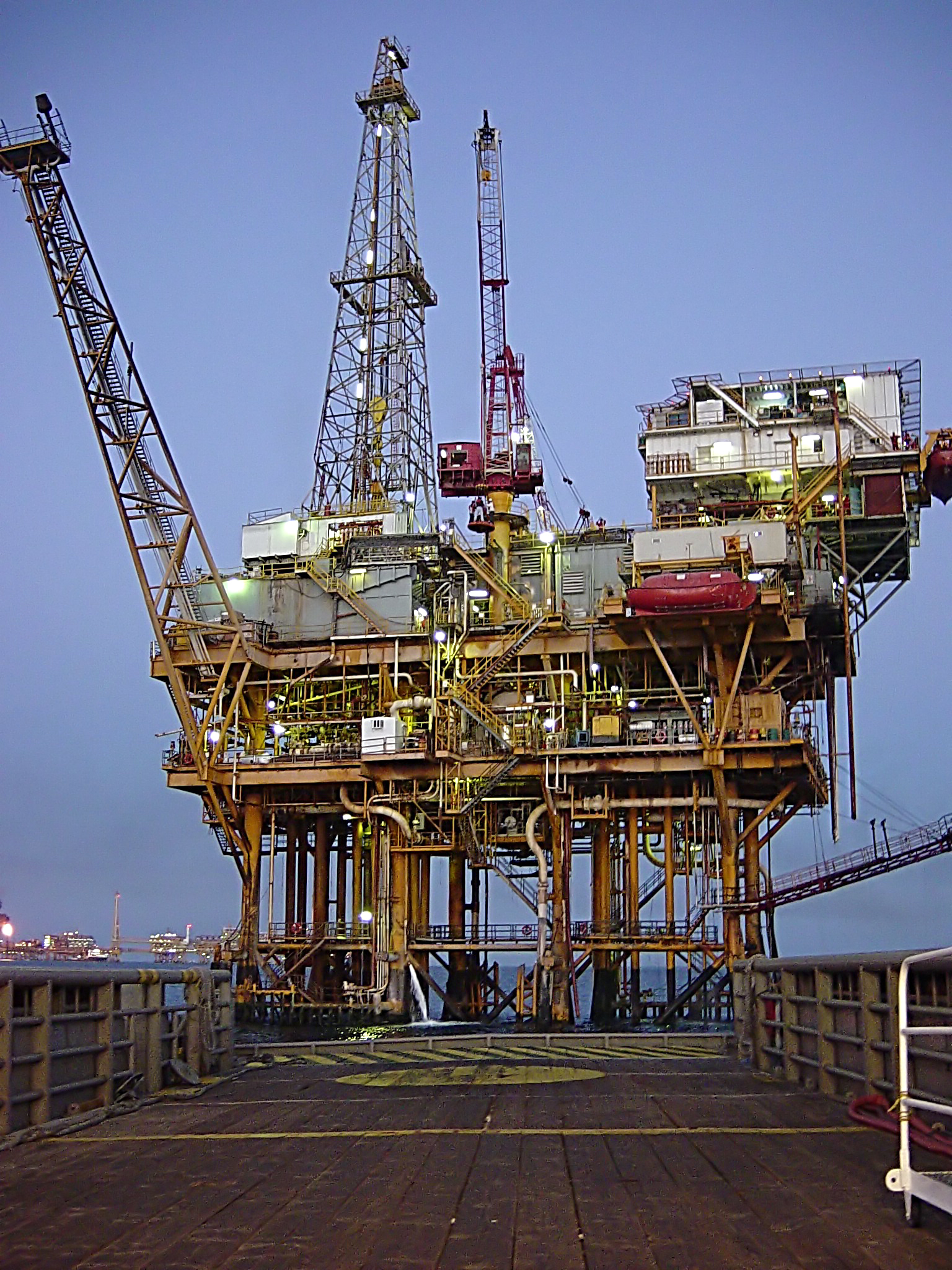
On the other side of the world, Hurricane Isaias is now barreling toward the US Gulf Coast carrying 75 mph winds, threatening storm surges from north Florida to east Mississippi, according to the National Hurricane Center. The storm formed on Wednesday and is expected to make landfall late Friday or early Saturday.
About 25% of current oil production in the Gulf of Mexico had been shut in as of midday Wednesday — roughly 511,619 barrels a day — according to the US Marine Minerals Administration, with 16% of natural gas production also offline.
Chevron said Wednesday it had begun shut-in procedures at four of its Gulf assets and was evacuating all associated personnel. Shell said it was halting production and evacuating staff at five of its sites. British firm Harbour Energy, which entered the Gulf through its takeover of LLOG Exploration in December, said it had also started cutting production at select facilities, while BP was removing nonessential personnel. The companies stressed the shut-ins should be temporary.
The combined threat to supplies on both sides of the world pushed Brent 5% higher to above $105 a barrel for the first time in three weeks, The Times reported.
What the IEA is doing about the supply shock

The International Energy Agency moved to calm markets on Wednesday, saying member governments would not add to the 400 million barrels of oil they agreed to release back in March — and would instead accelerate the releases still pending.
To date, roughly 325 million barrels have been released, with about 100 million barrels still to be brought to market, the IEA said, pledging to "accelerate" those releases. Those would include the diesel release that G7 countries agreed to last week. The Paris-based body said it held emergency oil stocks equivalent to around 1.1 billion barrels, including more than 200 million barrels of diesel, and added: "The IEA stands ready to release more of these stocks to the market if and when required."
ICE Gasoil Futures, a benchmark for European diesel prices, closed 6% higher on Wednesday, CNN reported. European benchmark natural gas prices neared their recent high from mid-September earlier on Thursday before pulling back.
Key Takeaways
- Brent crude jumped more than 5% on Thursday, settling above $105 a barrel for the first time in three weeks; US benchmark WTI climbed to $92.48.
- A record 10 tankers were struck in the Strait of Hormuz between September 28 and October 4, and crossings through the strait fell to a two-month low.
- Hurricane Isaias has shut in about 25% of US Gulf of Mexico oil production as Shell, Chevron, Harbour Energy and BP curtail operations and evacuate staff.
- Houthi attacks damaged two Saudi airports, and The Atlantic reported the White House has asked the Pentagon for Iran strike options ahead of the midterms.
- The IEA pledged to accelerate the remaining 100 million barrels of agreed oil releases and said it would free more stocks if needed.
- Rising prices lifted government borrowing costs in the UK and US and weighed on European equities on Thursday.
Why it matters
This is not just a traders' story. Higher crude feeds into petrol, diesel and heating costs for ordinary households, and into inflation that central banks are already fighting. In the UK, the yield on the 10-year gilt, which sets government borrowing costs, rose 4 basis points to 5.49%, while the US 10-year Treasury note rose 6 basis points to 5.34%, just short of multi-decade highs. The FTSE 100 and FTSE 250 each fell about 0.5% on Thursday, mirroring moves across Europe.
At the pump, the pressure is already visible. Britain's prime minister, Andy Burnham, acknowledged rising petrol prices on social media, writing: "You get to the pump, watch the numbers climb, and wonder why it's costing so much more than it used to. The reality is that global events are pushing up costs." US regular gasoline averaged $4.36 a gallon on Thursday, flat on the previous day, with diesel at $6.28, according to AAA.
Airlines are paying roughly 50% more for jet fuel than before the conflict began, The Times reported. Michael O'Leary, Ryanair's chief executive, said he expects prices to stay at these levels for the next 12 to 18 months and warned fares would keep rising: "The airlines cannot survive unless they pass on these insanely higher fuel costs in the form of higher offers and the customers will have to pay."
What happens next
Three things will decide whether $105 holds or breaks. First, the Strait of Hormuz: if tanker attacks keep rising or crossings drop further, supply premiums will grow. Second, Hurricane Isaias: landfall is expected late Friday or early Saturday, and producers say the shutdowns should be temporary — a fast recovery would remove one leg of the rally. Third, the IEA: markets will be watching whether the agency's accelerated stock releases, and any further emergency release, can cap prices — and whether US planning against Iran and the expanding Yemen conflict keep the fear premium alive.
Frequently Asked Questions
Why did oil prices jump today?
Four drivers hit at once: a record wave of tanker attacks in the Strait of Hormuz, Houthi strikes on two Saudi airports, Hurricane Isaias shutting in about a quarter of US Gulf of Mexico oil output, and reports that Washington is drawing up Iran strike options. Markets hate stacked supply risks, and prices reacted accordingly.
How high did Brent crude and WTI go?
Brent crude rose more than 5% at one point on Thursday before settling 4.8% higher at $105 a barrel around 8:30 a.m. ET; December Brent futures ended up 5.2% at $105.43, the highest since September 16. West Texas Intermediate gained about 5% to $92.48 a barrel, its highest since September 28.
Why is the Strait of Hormuz so important to oil prices?
The strait carried the equivalent of about one-fifth of the world's oil and fuel shipments before the current conflict began. Almost any disruption there raises global supply anxiety. This week, record tanker attacks pushed crossings to a two-month low, with just seven tankers transiting on Tuesday, less than half the weekly average.
How are Houthi attacks affecting oil prices?
The Houthis claimed attacks this week that damaged two Saudi airports, and fresh blasts were reported in Riyadh on Thursday. The strikes suggest a significant escalation in the Gulf conflict and threaten oil flows through the Red Sea, adding a Middle East risk premium on top of the Hormuz shipping crisis.
What is Hurricane Isaias doing to US oil production?
About 25% of current Gulf of Mexico oil output — roughly 511,619 barrels a day — was shut in by midday Wednesday as Shell, Chevron, Harbour Energy and BP curtailed operations and evacuated personnel ahead of landfall. Natural gas production was down about 16%. Producers say the shutdowns should be temporary.
What is the IEA doing about the supply shock?
The International Energy Agency said Wednesday it would accelerate the remaining 100 million barrels of the 400 million barrels of oil member governments agreed to release in March, including a diesel release. It holds about 1.1 billion barrels of emergency stocks and said it "stands ready to release more of these stocks to the market if and when required."
Will petrol and diesel prices rise?
Likely, yes, if crude stays elevated. US gasoline averaged $4.36 a gallon and diesel $6.28 on Thursday, according to AAA. Europe is already feeling it: ICE gasoil futures closed 6% higher on Wednesday, and airlines are paying about 50% more for jet fuel than before the conflict — costs carriers say passengers will absorb through higher fares.
Sources
- CNN: Oil prices jump amid record tanker attacks in Hormuz (Oct 8, 2026)
- The Wall Street Journal: Mideast Attacks, Gulf Coast Shutdowns Boost Oil Prices (Oct 8, 2026)
- Barron's: Oil Prices Leap on Reports of Houthi Attacks and as Hurricane Isaias Heads Toward U.S. Gulf (Oct 8, 2026)
- The Times: Oil price surges above $105 as hurricane threatens US producers (Oct 8, 2026)
- GlobalDeskNews: Hurricane Isaias to Hit Gulf Coast Saturday as Category 2 (Oct 8, 2026)
- GlobalDeskNews: Syria Weighs Sending Troops to Saudi Arabia Amid Yemen War (Oct 8, 2026)